Mark Twain and the Unconscionable War on Iran
The colonial period spanned roughly from the late 15th to the mid-20th century. During this time many European nations established political, economic, and social control over foreign territories in the Americas, Africa, and Asia, confiscating strategically important pieces of territory and demanding broad authority over tariffs and trade. But it wasn’t just the governments in many European nations that looted land and resources. Many Christian missionaries also knew an opportunity to loot when they saw one, and they acted to take whatever they could whenever they could. The excesses of one well-known missionary, Congregationalist minister William Scott Ament, made headlines back in the United States, particularly after Mark Twain wrote about his exploits.
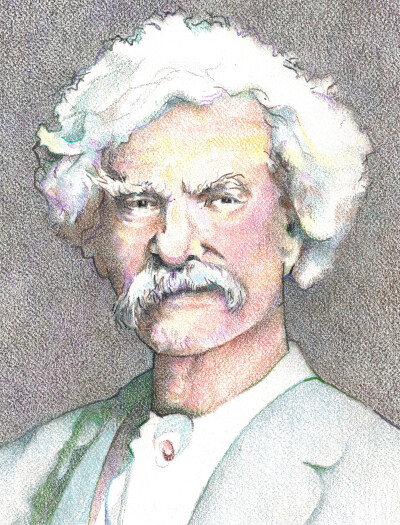
Twain’s satirical essay “To the Person Sitting in Darkness”, published in the February 1901 issue of the North American Review, exposed the ideological foundations of imperialism, for Twain was a key figure in the foundation of the American Anti-Imperialist League, becoming one of the organization’s Vice Presidents in 1901. But he also addressed the controversy of the church engaging in the exploitative looting of China. Twain regarded Reverend Ament as a moral hypocrite and fraud, and his treatment of the greedy minister was cuttingly sarcastic.
As I write this in the Spring of 2026, the events in Iran are provoking widespread fear, but also exhibiting religous darkness similar to what Twain’s essay so wittingly identified. For isn’t it strange to hear Donald J Trump implying that God supported his intention to annihilate the entire civilization of Iran? And perhaps even stranger yet, to hear supposedly devout Christians likening Donald J Trump to Jesus Christ, a comparison Trump unsurprisingly endorsed by his smug silence? Whoa! You don’t have to be a believer in any one deity or another to find these statements incredibly outrageous and unconscionable. And don’t you know that Twain, a purported non-believer himself, would be certain to agree these proclamations were every last bit of that and worse.
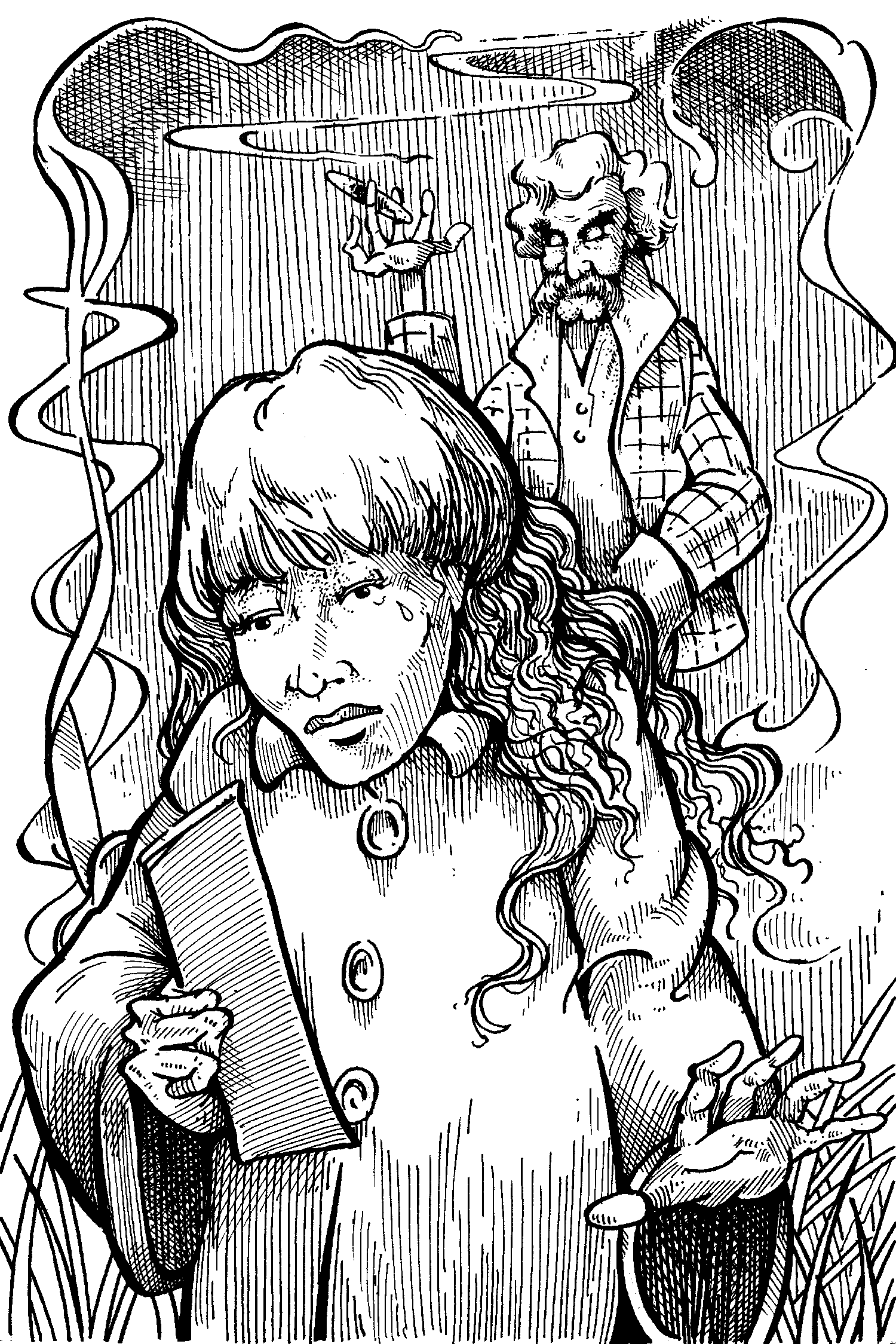
This I can state about Twain with full confidence. Regardless of what he believed or didn’t believe about a transcendent being, he possessed a fully operational conscience. He increasingly demonstrated this in his writing and actions as his awareness of history and his respect for his fellow human beings grew throughout his life. Pure wit that he was, he also toyed with the idea of conscience long before he fully developed his own. His satiric story The Facts Concerning the Recent Carnival of Crime in Connecticut delves into the matter of conscience in hilarious fashion. It is one of three stories in Twain Illustrated. See and enjoy one of Marc Johnson-Pencook’s illustrations from this great story below. And you can find even more illustrations by Marc and two other illustrators on the Look & See page. Better go there now or your conscience might bother you.