Can I Encourage Youth to Read? Probably not.
Research and observations suggest girls on average read more and show greater interest in reading than boys. From early childhood, girls are often encouraged more than boys to engage in reading and storytelling, which are seen as nurturing and quiet endeavors, while boys tend to be be steered more toward physical or outdoor activities. The content of books that school districts acquire is also a factor. Much of the literature available in early schooling consists of stories with the emotional and social content that girls prefer, while stories with the action content that boys like are deemphasized. In addition, studies show that girls tend to develop language skills earlier and more robustly on average than boys, which would likely make reading more accessible and enjoyable for them.
However, it’s important to note these are general trends, not rules. Many boys love reading, and many girls don’t. Also, efforts to diversify reading materials and encourage all children regardless of gender are helping to close this gap. Encouraging a love of reading in all children benefits literacy, empathy, and lifelong learning — essential for personal growth and a compassionate society. Offering diverse books to students that appeal across interests can help bridge any gender gaps.
Up until very recently, Adapted Classics stories were all selected without giving any consideration to gender appeal. Since my adaptations of classic literature feature illustrations, the stories I published tended to stress action. Mostly that’s because, besides scene description, stories with action illustrate more readily than introspective narration or scenes that focus on dialogue. Thus, based upon the gender content preferences just mentioned, Adapted Classics stories would just coincidently have greater appeal to boys than girls. And one more thing—within the public domain catalog we select from, almost all authors were male and their stories almost always featured male main characters.
It’s odd then that, since my catalog naturally tended to appeal more to males, when I did consciously consider gender appeal and made it a criteria, I selected boxing stories that would appeal to boys. My goal was to entice more boys to read because, as just cited, I knew they tended to be less interested in reading than girls (ha-ha—since I sell only a handful of books in any given year, does it matter more than one whit that I wanted to encourage boys to read? Realistically, no. One whit would about cover it).
Anyway, if it matters at all, I will try the gender appeal thing once again with my next book, but not because anyone needs to encourage girls to read. It’s because it’s high time that I adapt stories that were written by a female author.
The first female author I have chosen to adapt is Eliza Leslie, a notable author of children's stories in the mid-nineteenth century. If you’ve never heard of her, it is not because of her lack of success. "Miss Leslie," wrote Edgar Allan Poe, "is celebrated for the homely naturalness of her stories and for the broad satire of her comic style.” If anyone harbors doubts about this new venture of mine, I’m thinking Poe’s opinion should be endorsement enough. Do you agree?
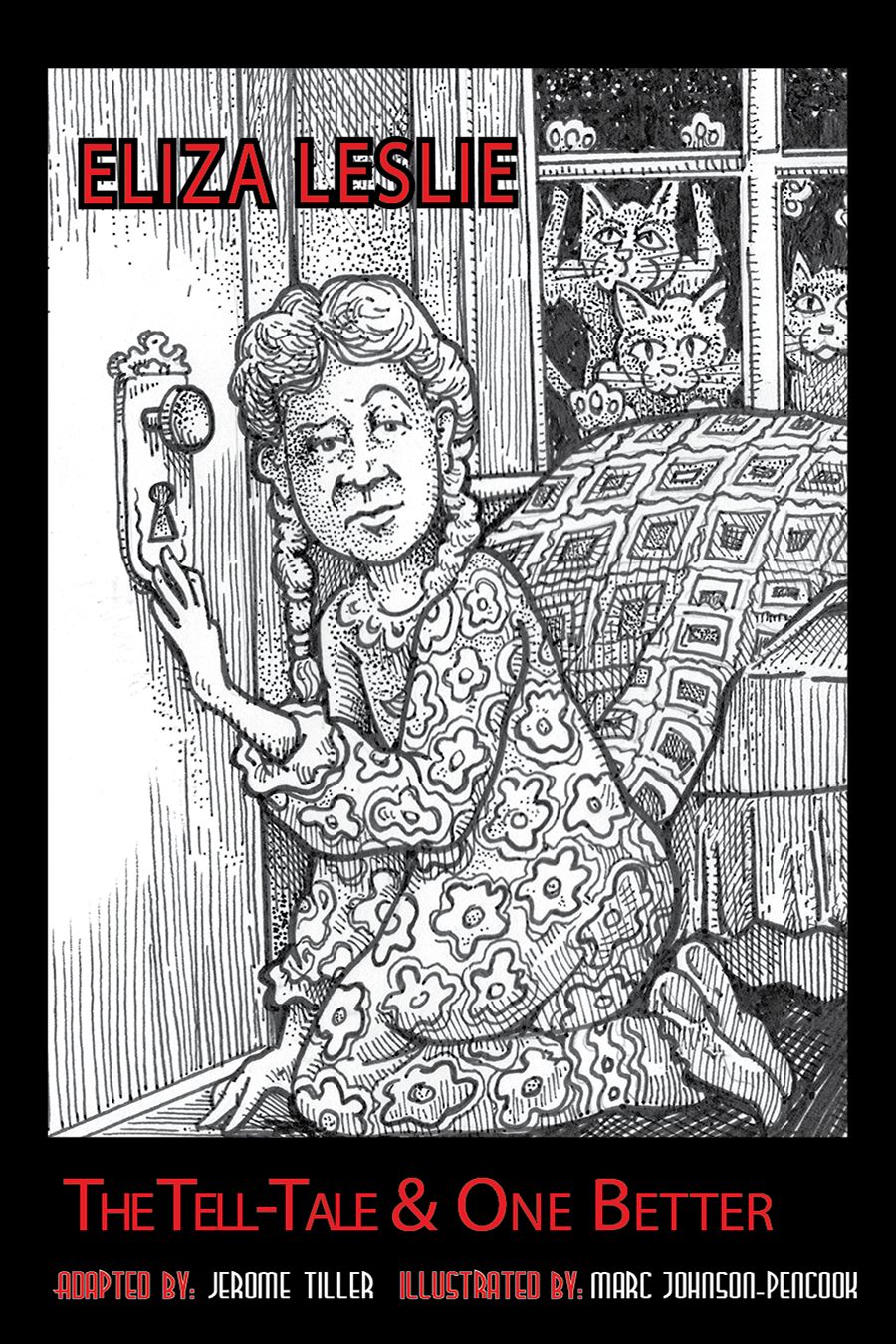
In the near future I will be publishing a book titled “The Tell-Tale and One Better”, which contains two of Eliza Leslie’s ‘naturally homely’ stories. As always, I will adapt the stories by adding illustrations that depict scenes and characters in the stories. If you check this blog again, soon you will find a synopsis of these two stories (The Tell-Tale and The Boarding School Feast), but until then, here is an image of the book’s front cover, which displays a segment of one of Marc Johnson-Pencook’s illustrations in “The Tell-Tale”. Don’t it look good?