You can make young boys want to read
The facts are clear: in every state, and undoubtedly every grade, boys are trailing behind girls in reading. The National Assessment of Education Progress measures reading skills at ages 9, 13, and 17. It shows boys’ reading skills consistently lag behind girls from the early grades through high school, with the largest gap in high school. While boys today have many more alternatives to books than they did in the past — including video games, television, and social media — experts say their lack of enthusiasm for reading is not new. Long ago John Locke, the noted philosopher of the Enlightenment era, lamented that male students were not able to write as well as female students. He also noted how much more easily girls picked up foreign languages.
So can anything be done to improve the reading habits of young boys? It might help if schools change their approach to reading, especially when considering the needs of boys. Since reading becomes more challenging for all students as they reach the fourth and fifth grade, and since the books they will read no longer have pictures, it might be best to transition to more difficult texts with illustrated classic stories before introducing them to classic novels.
To begin with, all classic short stories would likely be more interesting to boys than classic novels because they feature shorter chunks of text, and this would surely be appealing for many boys. Furthermore, since the narratives in classic stories resemble classic novels in complexity, adding illustrations to the stories would help young readers interpret more challenging narratives. In addition, illustrations also add entertainment value to increase the chance that readers will find literary works interesting. Entertainment value is beneficial no matter how it is accomplished, but especially for boys, as librarians will readily admit they find boys more challenging than girls when it comes to identifying books that interest them.
I think it also bears mentioning that boys sometimes get negative messages from parents and/or teachers about the reading material they do gravitate toward, which often includes magazines, sports stories, graphic novels, and books that feature gory scenes or gross humor. To change this negative dynamic, wouldn’t it be better to look for something that would qualify as literature within the disparaged lot of reading material that boys do tend towards? Such stories exist, and better yet, some are also illustrated.
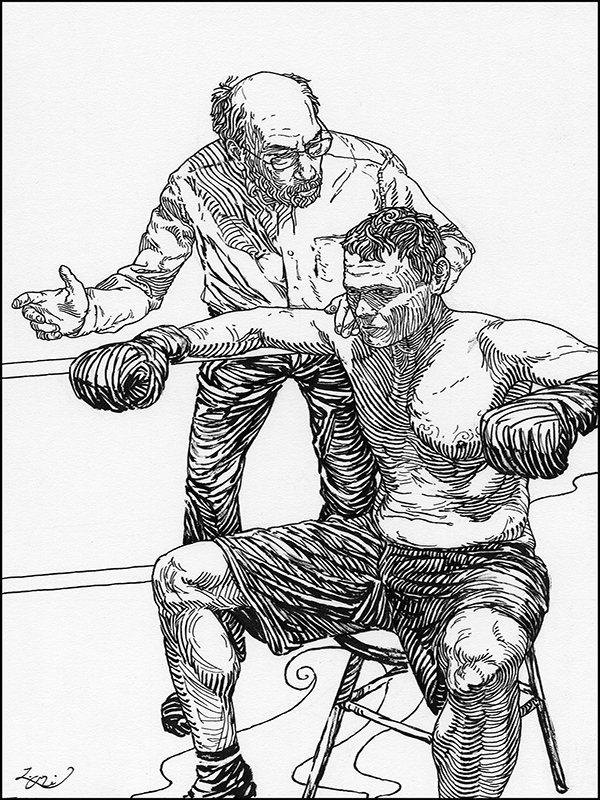
As one example, let me recommend our newest release, “Irish” and A Man’s Game by Donn Byrne, featuring illustrations by Liam O’Neil. You can see some of the Liam’s illustrations from the book right here. Both stories are primarily set in a boxing ring, and both are also a father-son stories. But each story is told from a different perspective, one from a son’s, one from a father’s. It qualifies as ‘classic’ literature because Donn Byrne was an outstanding author in the first part of the twentieth century. He is largely unknown only because fate robbed him of perpetual fame, killed as he was in a car accident while still a young man and firmly in the process of establishing a notable reputation.
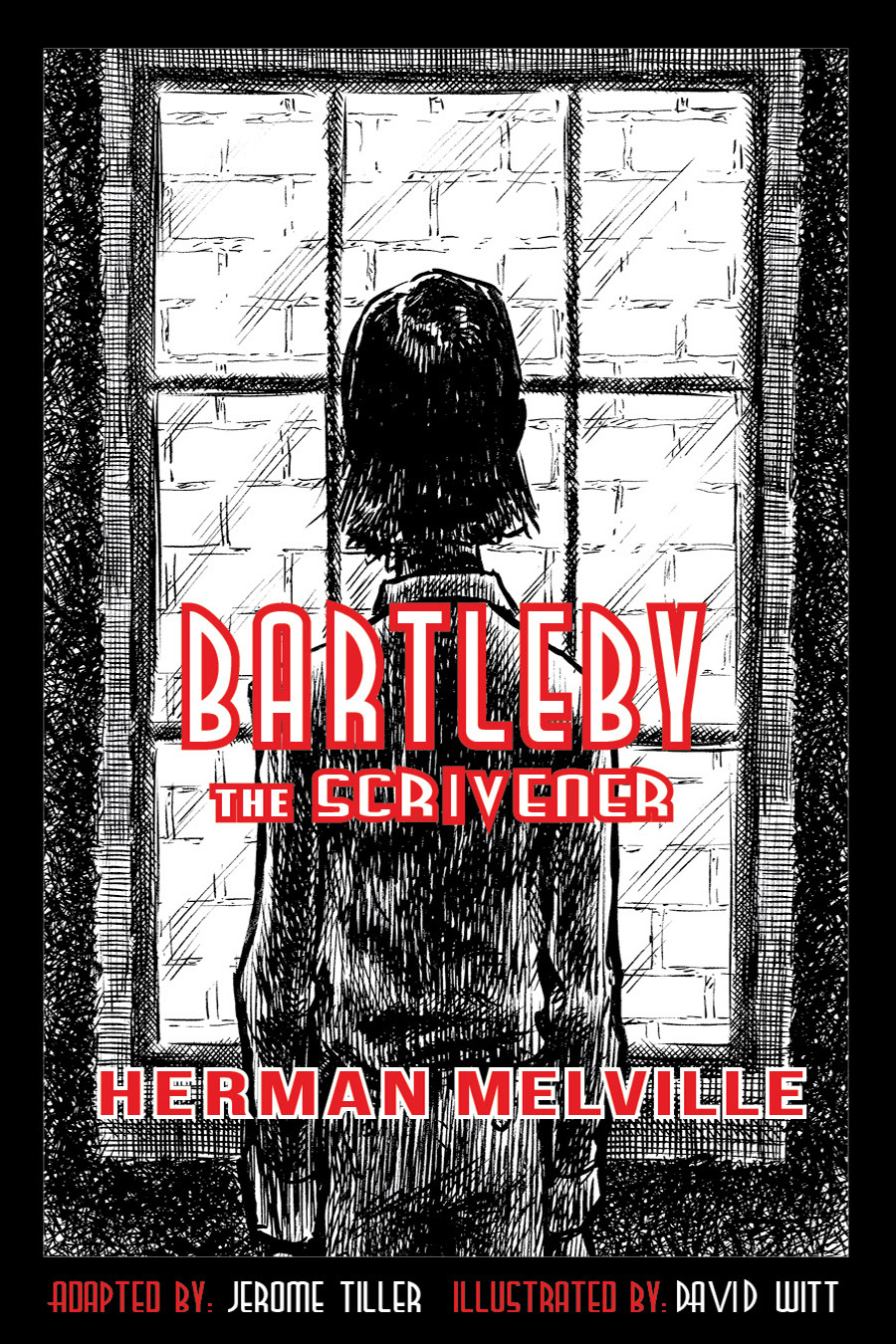
Finally, if you are an educator, let me suggest that you contact your school’s administrator or librarian and let them know they can find the book in Follett’s Titlewave collection. It’s a great opportunity for you to earn some polished apples by seeing to it that your boy students get a literary treat. And, oh, by the way, Follett carries all the other titles in our Adapted Classics catalog, too. You can check all of them out here before you go find them at Titlewave. Please do, then here’s betting you’ll get your well-deserved apples!